Loading
Evaluation · trust
LiveEvaluate as every role — not only the owner tour
Buyers regret tools that look great in an owner demo and collapse for technicians. Seeded multi-role accounts make evaluation honest.
Primary persona: Buyer evaluating
The problem
What breaks without this process
Sales demos hide tech friction and RBAC gaps until after contract.
Why it matters
Rationale — profit, risk, and shop floor truth
- 01
Owner sees KPIs and AR; tech sees My Day; advisor sees intake and estimates.
- 02
Isolation demo (other shop login) proves multi-tenant boundaries.
- 03
No fake customer logos required — use the product.
- 04
Shortens procurement cycles for serious independents and groups.
Proof from the live demo
Real UI — not a pitch mockup
Captured from the seeded multi-tenant demo. Open the same surface with demo credentials.
live demo capture
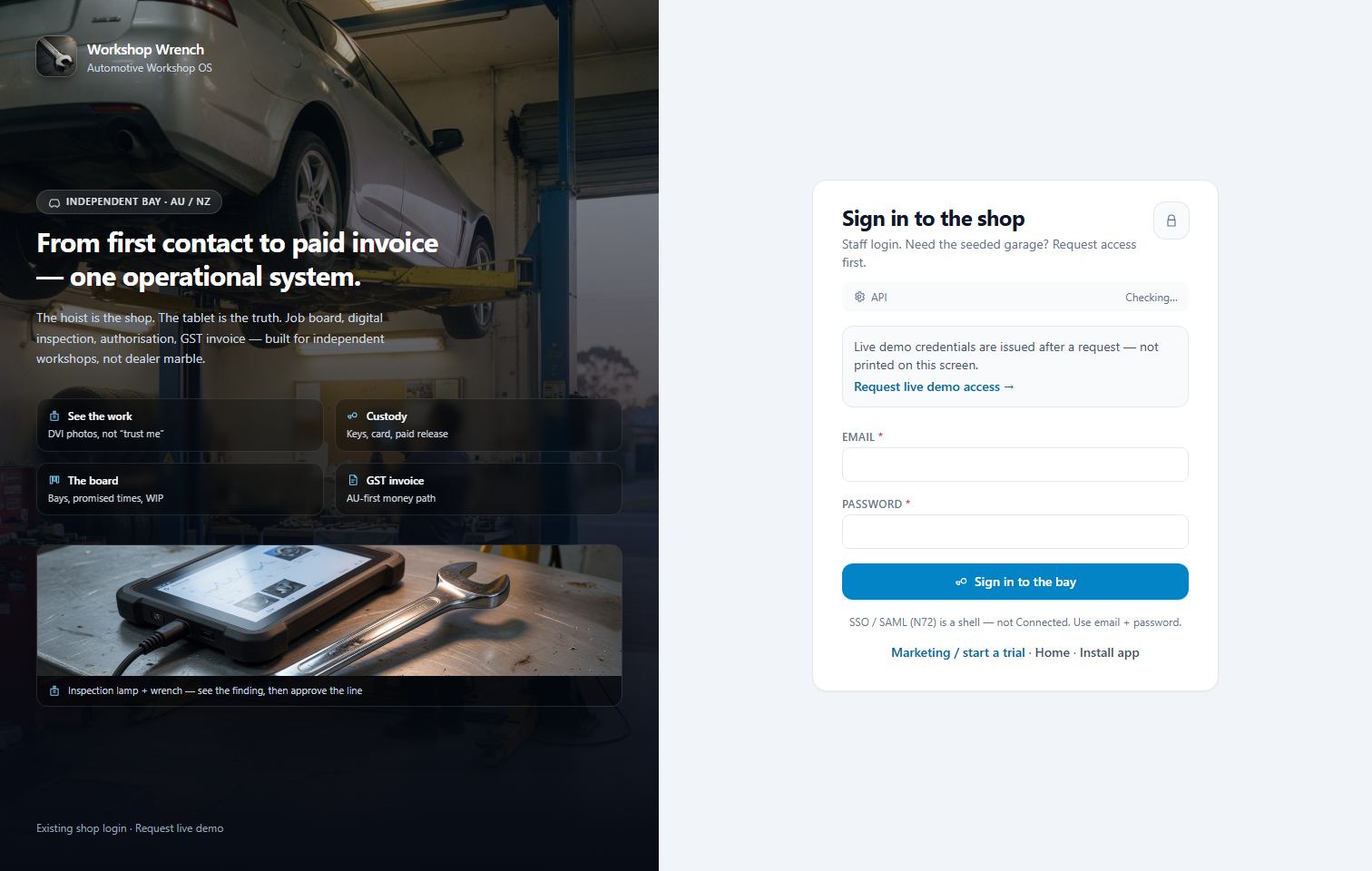
live demo capture
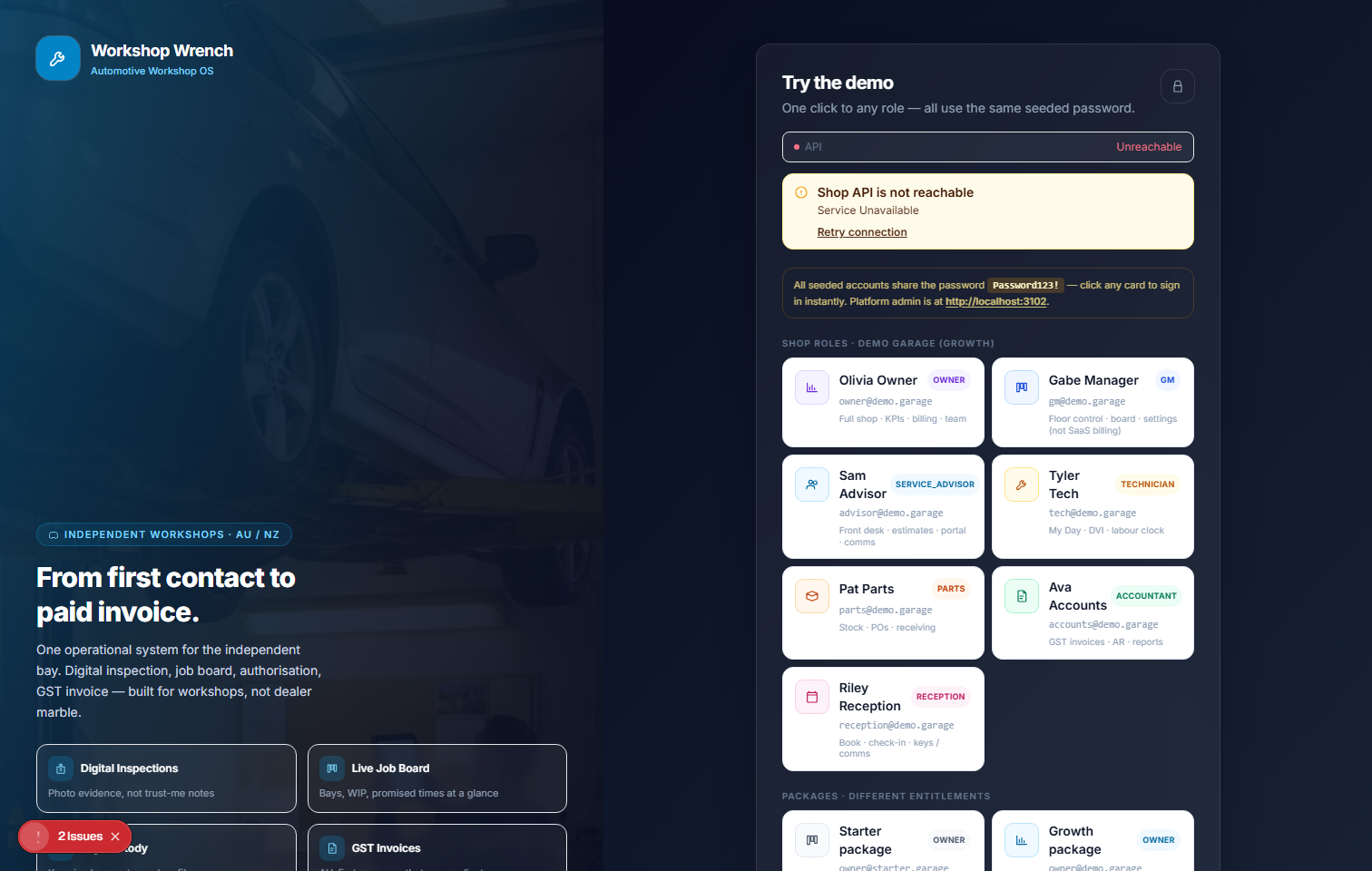
Stage sequence
Step-by-step use case
Each stage lists the action, the business why, and the intended outcome. This is how we implement and test the product — not marketing fiction.
- 01
Owner path
Action
Login owner@demo.garage — dashboard, board, invoices, settings.
Why this stage
Validates profit and control surfaces.
Surface: LoginOutcome: Owner confidence - 02
Technician path
Action
Login tech@demo.garage — My Day, timers, findings.
Why this stage
Validates floor usability and training time.
Surface: My DayOutcome: Tech confidence - 03
Advisor path
Action
Use advisor account when seeded — customers, bookings, portal approvals.
Why this stage
Validates front-of-house speed and CX.
Surface: Customers / BookingsOutcome: Advisor confidence - 04
Isolation check
Action
Login owner@other.shop — confirm data does not leak across tenants.
Why this stage
Security theatre fails this test; multi-tenant products must pass it.
Surface: LoginOutcome: Trust boundary
Related search intent
- shop software demo login
- multi user workshop software
- RBAC auto repair